![]()
![]()
"WE SEEK THE HIGHEST"
![]()
![]()
Notes
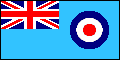
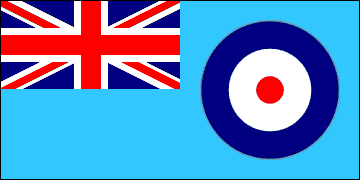
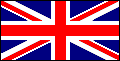
The RAF Ensign dates from 1920, after the Royal Flying Corps (Army) and the Royal Naval Air Service were amalgamated to form an independent air arm. The only design changes over the years have involved the size of the roundel. The RAF ensign is flown instead of the Union Jack over RAF installations and it also serves as the flag of the Chief of the Air Staff. Its basic pattern—a light blue field with the national flag as a canton and the air force insignia in the fly—has been copied by many other nations.
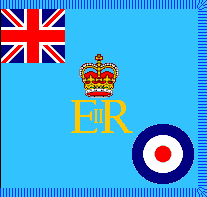
For many years the RAF possessed no color for use on ceremonial occasions, but in 1951 King George VI presented a King's Colour to the RAF. It was based on the design of the RAF ensign, with the roundel displaced to the lower fly and the crowned Royal Cypher added. In 1968, this color was replaced by an new one with Elizabeth II's cypher and the Tudor crown substituted for the previous Imperial crown. A Queen's Colour is provided to each major command of the RAF for use in ceremonies.
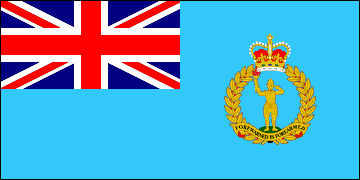
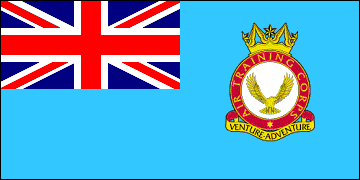
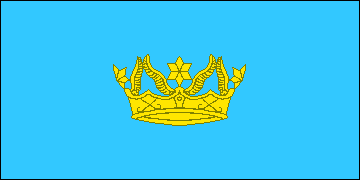
Distinctive ensigns have also been granted to various auxiliaries of the RAF. The most important of these are the Air Training Corps and the Royal Observer Corps (ROC). The latter was organized in the 1930's as part of Britain's air defense system, and it rendered distinguished service during World War II. In the postwar period, the ROC was reorganized several times and took on new roles, but it was inactivated at the end of the Cold War. Its ensign, however, is still official. The insignia in the fly is a representation of the ROC cap badge; it depicts an Elizabethan coast watcher.
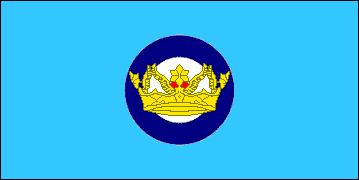
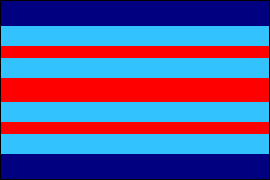
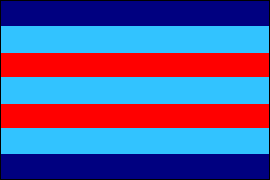
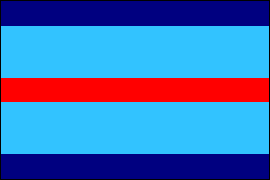
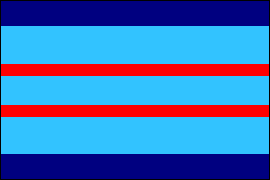
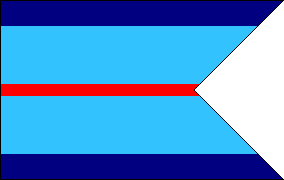
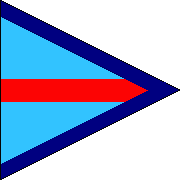
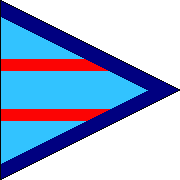
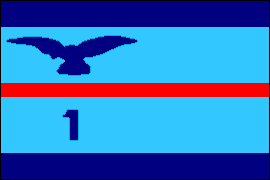
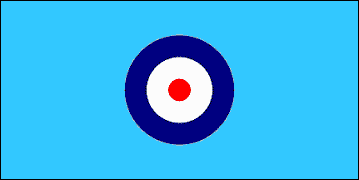
When the RAF was founded, its officers were given distinctive rank titles as follows (the equivalent Army rank is indicated in parenthesis): Marshal of the Royal Air Force (Field Marshal); Air Chief Marshal (General); Air Marshal (Lieutenant-General); Air Vice-Marshal (Major-General); Air Commodore (Brigadier); Group Captain (Colonel); Wing Commander (Lieutenant-Colonel); Squadron Leader (Major); Flight Lieutenant (Captain); Flying Officer (Lieutenant); and Pilot Officer (Second Lieutenant). The seven higher ranks have distinguishing flags or pennants. Squadron Commanders actually in command of squadrons also have a rank flag incorporating the squadron number. All these rank flags may be painted on aircraft. RAF Station Commanders fly a light blue flag charged with the RAF roundel.
CREDITS: FOTW Mailing List member Graham Bartram (UK) has described and illustrated various RAF ensigns. My drawings of the RAF's rank flags are based on illustrations by FOTW Mailing List member Roy Stilling (UK).
![]()

THE ROYAL AIR FORCE ENSIGN and FLAG OF THE CHIEF OF THE AIR STAFF

QUEEN'S COLOUR OF THE ROYAL AIR FORCE

Left: AIR TRAINING CORPS ENSIGN Right: ROYAL OBSERVER CORPS
ENSIGN
RANK &
APPOINTMENT FLAGS

MARSHAL OF THE ROYAL AIR FORCE

Left: AIR CHIEF MARSHAL Right: AIR MARSHAL

Left: AIR VICE-MARSHAL Right: AIR COMMODORE

Left: GROUP CAPTAIN Right: WING COMMANDER

RAF STATION COMMANDER
![]()
BACK to UK Page