REPUBLIC OF CHINA & REPUBLIC OF CHINA (TAIWAN)
ARMY FLAGS SINCE 1912
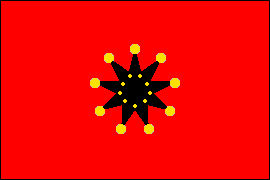
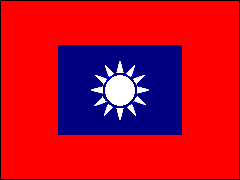
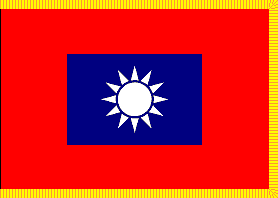
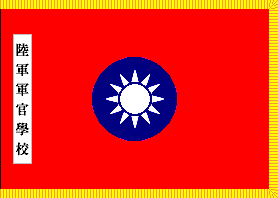
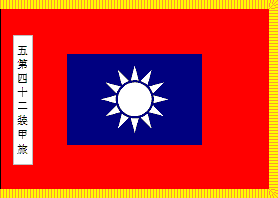
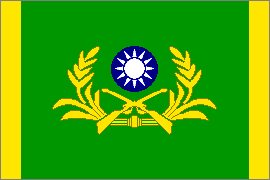
In 1912 the new Republic of China adopted as its war flag the banner that had been raised by Army rebels in 1911: a red field for China with a black star and eighteen gold balls, one for each province of the nation. In 1928, however, the government of General Chiang Kai-shek abolished both the Five-Color Flag and the 1912 war flag. The 1912 naval ensign became China's national flag, and the 1912 war flag was replaced by a red flag with the White Sun in Blue Sky Flag centered. These flags disappeared from mainland China after the Communist victory in 1949, but they are still used by the Republic of China (Taiwan). Today the war flag is used on ceremonial occasions to represent the Army. With a vertical white stripe at the hoist bearing an appropriate inscription in Chinese characters, it also serves as a unit flag. However, the Honor Guard of the ROC Army has a distinctive color.
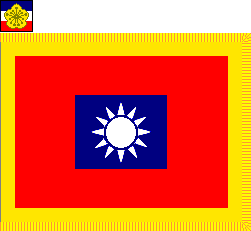
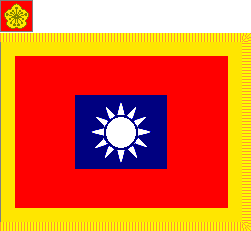
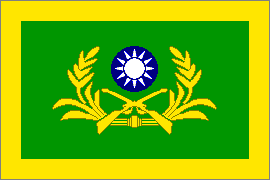
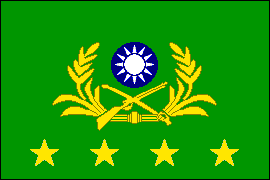
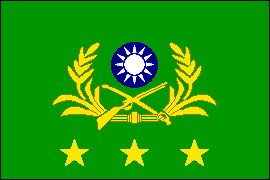
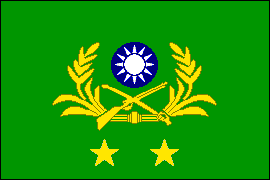
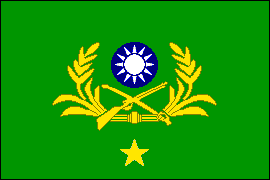
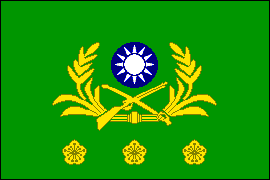
The fringed distinguishing flags of the commander and deputy commander of the Army, based on the war flag, date from 1953. Note the small pennants, charged with a gold plum blossom, that are placed on the staff above the flags. These flags were replaced in 1958 by designs similar to the current chief of staff and deputy chief of staff flags. They and the current rank and rank flags of the Army are green and bear the Army badge, with stars or (for colonels) plum blossoms according to position or rank. Up to the mid-1980s the stars and plum blossoms were white rather than yellow.
Flag Proportions: Current Republic of China Army flags have 2:3 proportions. The original 1928 war flag and some other past military flags were made in 3:4 proportions, as illustrated.
Image Added December 2021
Color of the Republic of China Army Honor Guard