US ARMY OFFICIALS & GENERAL OFFICERS

icon96.gif (408 bytes)

COLORS & DISTINGUISHING FLAGS

1923-31 Regulations

Notes

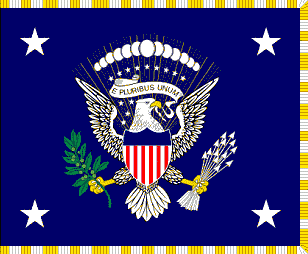
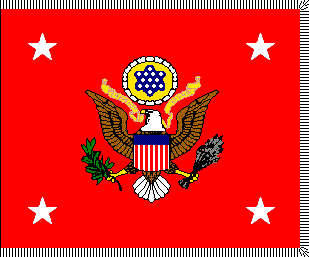
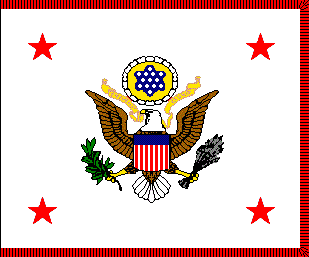
The drawings on this page depict the colors and flags authorized by the 1923 and 1931 regulations for individuals within the Department of War. In general, those individuals designated as supreme commanders (the Secretary and Assistant Secretaries of War, the General of the Armies and the Chief of Staff of the Army) were authorized a flag for outdoor display on land, a color, a combination field and boat flag, and a car flag. All others were authorized a field and boat flag and a car flag only.

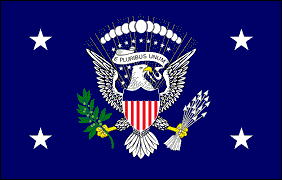
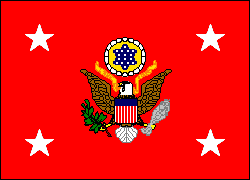
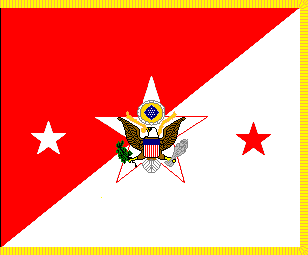
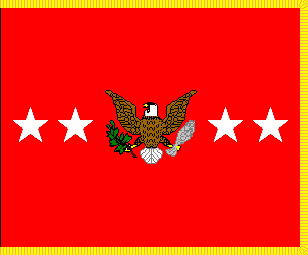
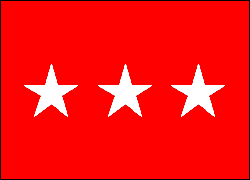
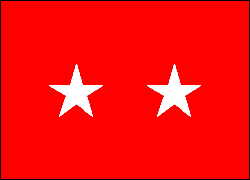
The flags and colors for the Secretary and Assistant Secretaries of War and the Chief of Staff were the same as those used today for the Secretary and Undersecretary of the Army and the Chief of Staff of the Army. The 1923 regulations, however, specified three versions for the Chief of Staff, with stars according to rank. The 1931 regulations abolished the two- and three-star versions, since by then it was accepted that the Chief would always be a four-star general.

General John J. Pershing, who held the unique rank of General of the Armies, was authorized to display a special flag and color. While serving as Chief of Staff in the 1920s, however, he used the four-star Chief of Staff flag.

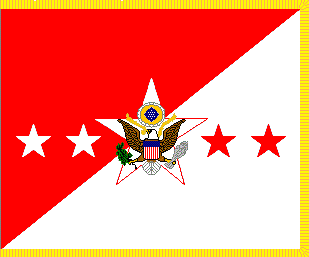
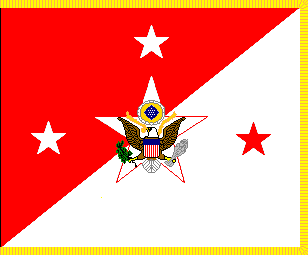
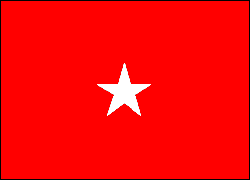
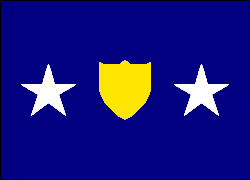
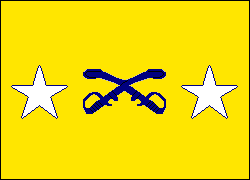
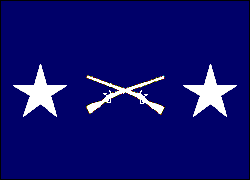
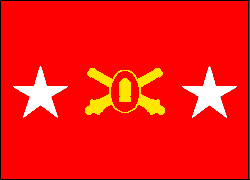
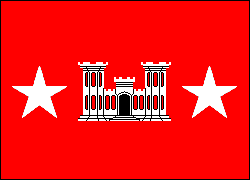
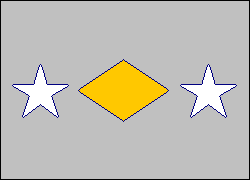
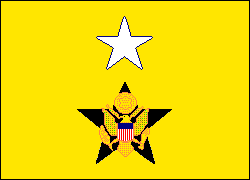
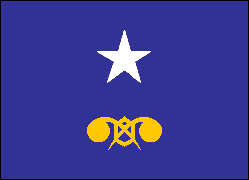
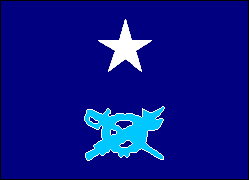
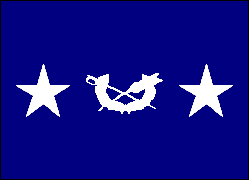
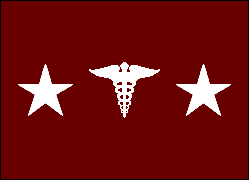
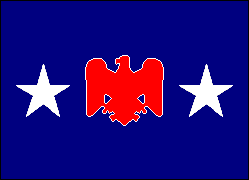
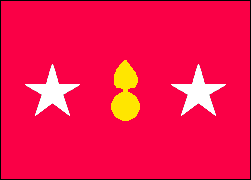
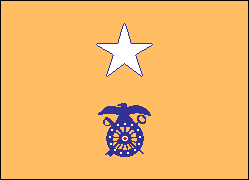
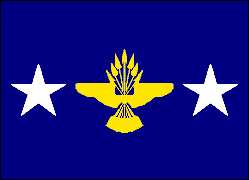
The 1923 regulations specified scarlet field and boat flags with white stars according to rank for all generals except the General of the Armies (General John J. Pershing), with special car flags for general officers of the staff. In the 1931 regulations, however, distinctive field and boat flags were introduced for general officers of the staff. These had a field in the primary branch color with the branch insignia in the secondary branch color and white stars according to rank. If necessary, the stars and insignia were piped with blue or white. Usually the chief of a department or branch was a major general, so that the two-starred flag was in effect that of the chief. However, if there were two or more major generals assigned, they all used the same two-starred flag.

See also The US Army Air Corps, 1923-39.

Dimensions & Materials: Flags for supreme commanders were 6 feet 8 inches at the hoist by 12 feet on the fly, while colors were 4 feet 4 inches at the hoist by 5 feet 6 inches on the fly plus 2 1/2-inch fringe. All field and boat flags were 3 feet at the hoist by 4 feet 9 inches on the fly. Flags were made of wool bunting and colors were made of silk.

Credits: The drawings on these page are based on the specifications given in Army Regulation 260-10 dated February 8, 1923 and November 20, 1931, copies of which were kindly provided by FOTW Mailing List member Joseph McMillan.

CIVILIAN OFFICIALS


Left: FIELD & BOAT FLAG, SECRETARY OF WAR

Right: FIELD & BOAT FLAG, ASSISTANT SECRETARY OF WAR
 

COLORS FOR THE CHIEF OF STAFF
 

Left: COLOR, CHIEF OF STAFF (AS GENERAL OF THE ARMIES OR GENERAL)


Left: COLOR, CHIEF OF STAFF (AS LIEUTENANT GENERAL)

Right: COLOR, CHIEF OF STAFF (AS MAJOR GENERAL)
 

GENERAL OFFICERS' RANK FLAGS
 

COLOR, GENERAL OF THE ARMIES


Left: FIELD & BOAT FLAG, GENERAL     Right: FIELD & BOAT FLAG, LIEUTENANT GENERAL


Left: FIELD & BOAT FLAG, MAJOR GENERAL     Right: FIELD & BOAT FLAG, BRIGADIER GENERAL
 

DISTINGUISHING FLAGS FOR GENERAL OFFICERS OF THE STAFF
 

THE ADJUTANT GENERAL


Left: CHIEF OF CAVALRY     Right: CHIEF OF INFANTRY


Left: CHIEF OF COAST ARTILLERY     Right: CHIEF OF FIELD ARTILLERY


Left: CHIEF OF ENGINEERS     Right: CHIEF, FINANCE DEPARTMENT


Left: BRIGADIER GENERAL, GENERAL STAFF

Right: BRIGADIER GENERAL, CHEMICAL WARFARE SERVICE


Left: BRIGADIER GENERAL, INSPECTOR GENERAL'S DEPARTMENT

Right: THE JUDGE ADVOCATE GENERAL


Left: CHIEF, MEDICAL DEPARTMENT     Right: CHIEF, MILITIA BUREAU


Left: CHIEF, ORDNANCE DEPARTMENT

Right: BRIGADIER GENERAL, QUARTERMASTER CORPS
 

CHIEF, BUREAU OF INSULAR AFFAIRS

BACK to US ARMY Page